
Logging Off and Tuning In: Why ‘Going Analog’ Is Having a Moment
The viral "going analog” movement on social media reflects a deeper cultural shift towards more intentional living. Columnist Alexis Benveniste argues it doesn’t have to be all or nothing.


Being online has never been easier, or more exhausting.
Recent surveys show that half of American adults are acutely aware of how much time they spend online and are actively trying to cut back on screen time in 2026.
The average person nowadays is said to spend 21 years looking at a screen, according to one study.
It’s no wonder people are looking for ways to slow down and reclaim their attention.
It is slightly ironic, though, that a new wave of social media trends like “going analog” or creating an “analog bag” full of books, puzzles and non-digital items have gone viral, signaling a broader cultural shift towards more intentional living.
We’re also not blind to the irony that this is being written on the digital platform Substack.
At e.l.f. Beauty, we often talk about keeping up with the speed of culture by staying deeply connected to our community. Right now, culture is telling us something clear: self-expression extends far beyond the internet. It’s also happening in quiet, tactile, deeply human moments where presence is the goal. We are not here to condemn social and digital, it’s a big part of who we are and how we reach our community. But two things can be true.
This week’s columnist for Zero Distance, Journalist, Alexis Benveniste of the Substack Extra Credit, writes that analog doesn’t have to be all or nothing or rejecting technology entirely. The trend can simply be a mindful daily practice to disconnect from the hyper-connected modern world and give time for more holistic living.

Going Analog Is More Than a Trend
By Alexis Benveniste
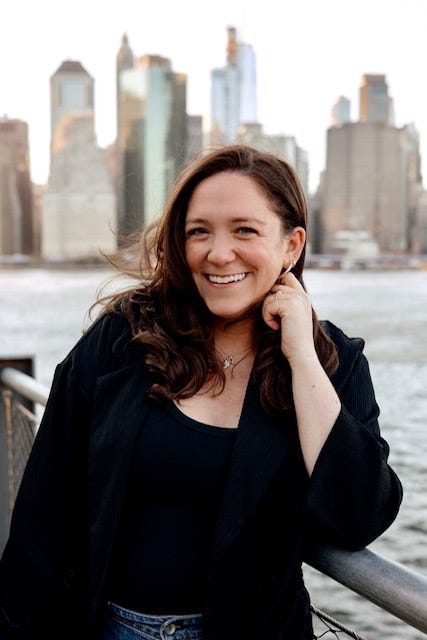
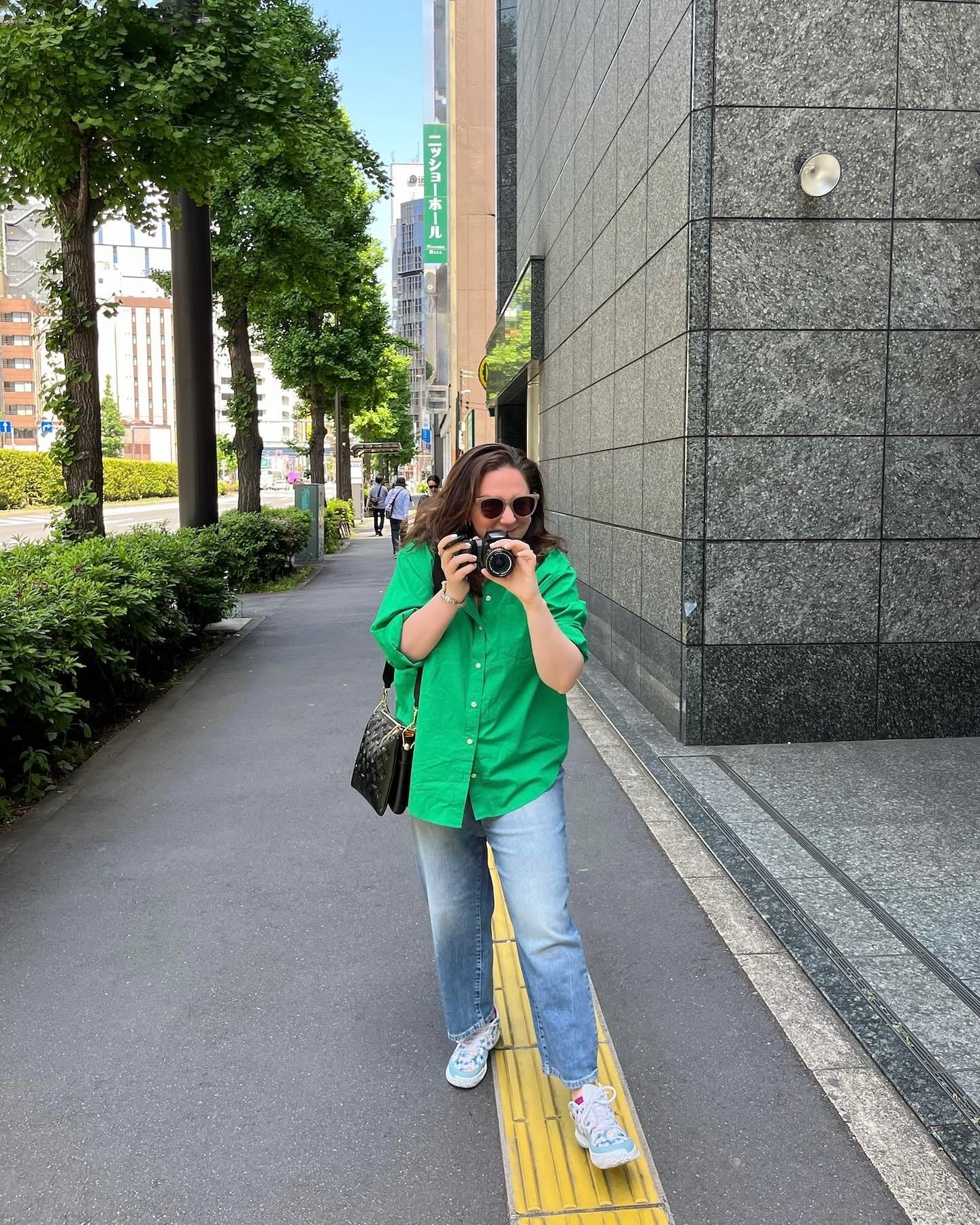
You know what’s beautiful? Being offline. People are putting down their phones, not because they have to (don’t tempt me with a good time), but because they really want to. This means reaching for paper planners instead of only relying on a Google Calendar, snapping photos with actual cameras – even if they’re digital – instead of always whipping out an iPhone, and filling notebooks with handwritten pages. And while this might just sound like the digital version of a remote meditation retreat to some, it’s more about opting for a more intentional and more measured way of living. Call it the analog revolution, though revolution might be too loud a word for something that feels, at its core, like an exhale.
The shift makes sense when you consider what’s been going on around us. Less than three years ago, more than half of Americans admitted to feeling addicted to their phones. Now, we’re tired. Not just tired of our phones, but tired of feeling like we need to be "on" all the time, performing for an invisible audience, absorbing the opinions of more than 300 strangers before we even eat our breakfast. The internet promised connection, but somewhere along the way, many of us started feeling more isolated than ever.
The analog wellness movement is showing up in full-force in unexpected places: what’s-in-my-bag-style videos of “analog bags“ filled with crossword puzzles, knitting supplies, and Polaroid cameras. Run clubs and book groups that enforce no-phone or silent policies. Off-grid retreats with no WiFi that are booking out months in advance. Even some Silicon Valley execs (the very people who are responsible for building our always-connected world) are turning off their smartphones in favor of “dumb” phones and creating peaceful WiFi-free sanctuaries in their own homes.
The irony isn’t lost on anyone. Afterall, I’m writing – and you’re reading – about going analog on Substack. People are discussing digital detoxes on social media, watching TikToks about journaling. But it often feels like this specific platform operates differently. Substack doesn’t necessarily lend itself to endless scrolling or algorithm-driven anxiety spirals. You choose what to read. You read it. You move on. Or at least that’s how I use it. It does feel like there’s often a natural endpoint. In that sense, sometimes Substack feels like it functions more like the analog world than the rest of the internet with intentional consumption rather than passive absorption.
Research backs up what many of us already feel intuitively: 91% of participants in digital detox programs experience at least one significant improvement in psychological well-being, according to a Georgetown University study. When we write by hand instead of typing, we activate the Reticular Activating System in our brains, a filter that decides what information is critical and what is extra noise. Handwriting literally changes how we process and retain information, which explains why I still love handwriting my to-do list. It forces us to slow down and be more deliberate with our words, which I think is good for all of us, really.
The same principle applies to reading physical books versus scrolling through feeds, using a paper calendar versus a digital one, taking photos with a real camera versus a phone. These analog activities have natural endpoints. A book finishes. A puzzle completes. A recipe becomes dinner, and then you eat it, of course. Unlike a social media feed, which never ends, analog experiences offer closure, and closure is good for our brains.
Handwriting literally changes how we process and retain information, which explains why I still love handwriting my to-do list. It forces us to slow down and be more deliberate with our words, which I think is good for all of us, really.
This movement represents a return to tangible experiences in an increasingly intangible world. Physical media is making a comeback with vinyl sales going up, independent bookstores opening, people collecting CDs and cassette tapes. There’s something deeply satisfying about owning your media, about having a shelf of books that can’t disappear when a streaming service decides to remove them from its catalog. After years of renting our culture from platforms, we’re focusing on creating our own substance and remembering what it feels like to actually possess things, to build collections that reflect who we are.
But perhaps the most powerful aspect of the analog movement is how it intersects with intentionality. And for some people, that intention naturally aligns with being more analog.
The beauty of going analog is that it doesn’t have to be all-or-nothing. You don’t have to throw your smartphone in a fountain a la Devil Wears Prada or move to an off-the-grid cabin in the woods (though retreats are trending and always sound appealing). It’s entirely possible to find a middle ground that works for you, what some call the 80/20 approach: using digital tools for execution and logistics, but reserving analog methods for strategy, creativity and deep thinking.
And perhaps that’s where we should be, recalibrating from the oversaturated digital world we’ve all been living in. Maybe that means starting the morning with anything other than scrolling on Instagram. Maybe it’s keeping your phone in a designated spot when you’re home instead right next to you at all times. Maybe it’s pushing yourself to do at least one screen-free activity every day — a walk, cooking from a physical recipe book (crazy, I know) or buying and reading an actual newspaper.
The analog movement is about recognizing that more connectivity hasn’t necessarily made us more connected, and that sometimes the best way forward is to actually step back and take inventory. That means creating the physical, mental and emotional space to hear ourselves think. To let our thoughts wander. To exist without documenting it. To create without immediately posting it.
In a digital world that moves at a speed that often feels difficult to keep up with, going analog is a much-needed form of resistance that’s gentle, personal, and profoundly human, and I’m here for it.
How are you planning to go analog this year?
Alexis Benveniste is a writer who covers culture, travel and business for several outlets, including The New York Times, Bloomberg and New York Magazine. She writes the Substack, Extra Credit.

 | A guest post by
|
e.l.f.ing loved seeing this.
We’ve normalized being constantly on, tracked, and stimulated and it’s just not how we’re wired. I’ve been experimenting with screen-free weekends lately: more time outside, reading, writing, moving. Less noise, less measuring. More of what actually matters. Balance is key!
OMG e.l.f.ing loving this so so much 🩷 it's great to have a good balance !!